hello(at)acdesign.io
acdesign & strategy © 2025

menu
close
"Thinking Through the Museum" is a collaborative initiative bringing together scholars, museum professionals, and community representatives from 20 museums worldwide to address legacies of violence and injustice.
COMPANY:
acdesign & strategy
ROLE:
Lead Designer
Decoloniality Metrics:
Accessible • Culturally-diverse • Non-hierarchical • EISJ • Relational • Intersectional
thinking through the museum: a partnership approach to curating difficult knowledge in public is a project which started as an effort to create the website and visual identity for a partnership that seeks to bring together international scholars, students, museum professionals and community representatives from 20 museums, along with universities and NGOs across the globe.
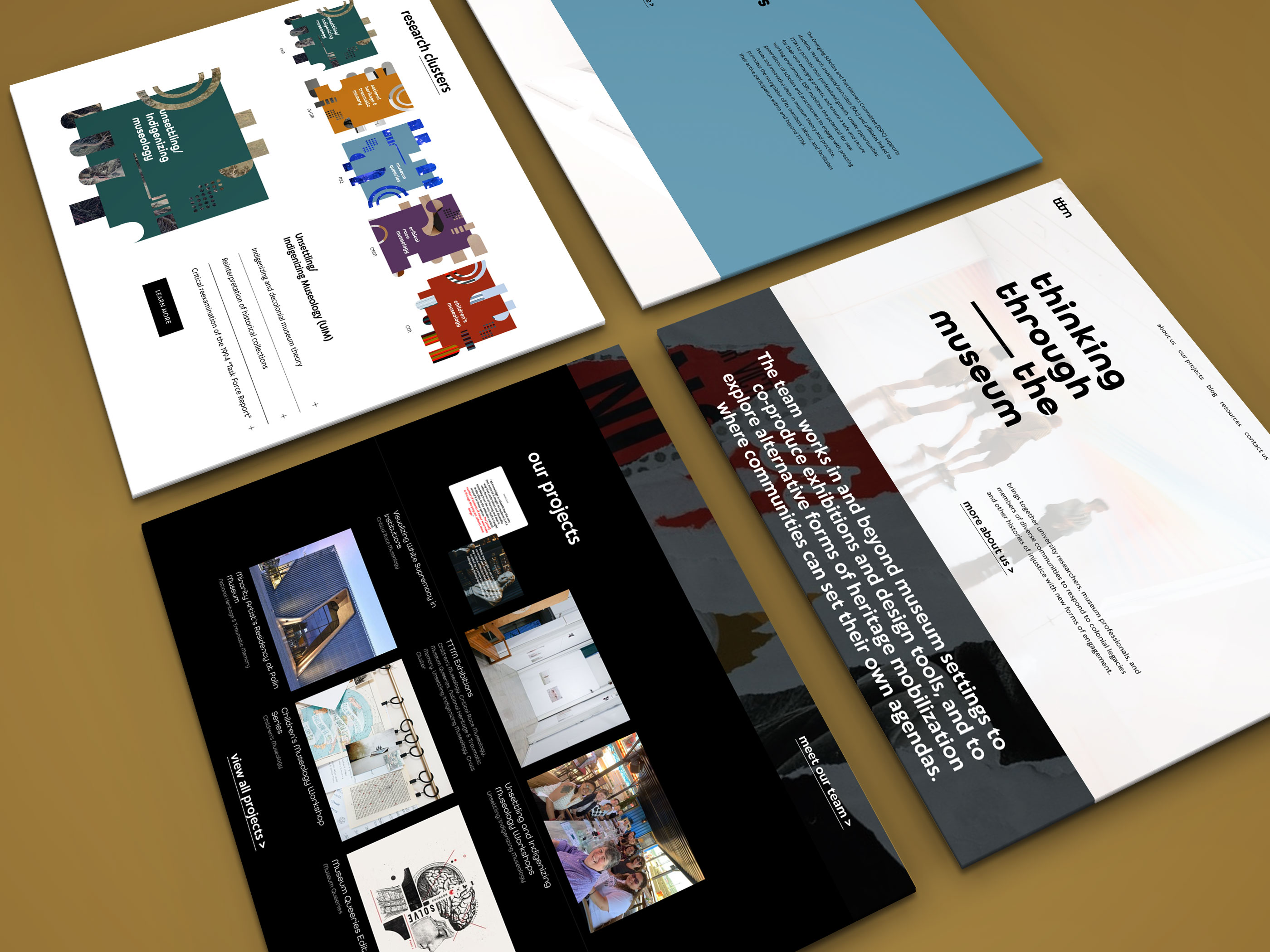
The partnership’s core values rely on working as and with members of marginalized communities through 5 thematic research groups (Unsettling/Indigenizing Museology, National Heritage & Traumatic Memory, Museum Queeries, Critical Race Museology, Children’s Museology) that use the power and potential of museums to critically assess and respond to legacies of mass violence and injustice across different cultural contexts.
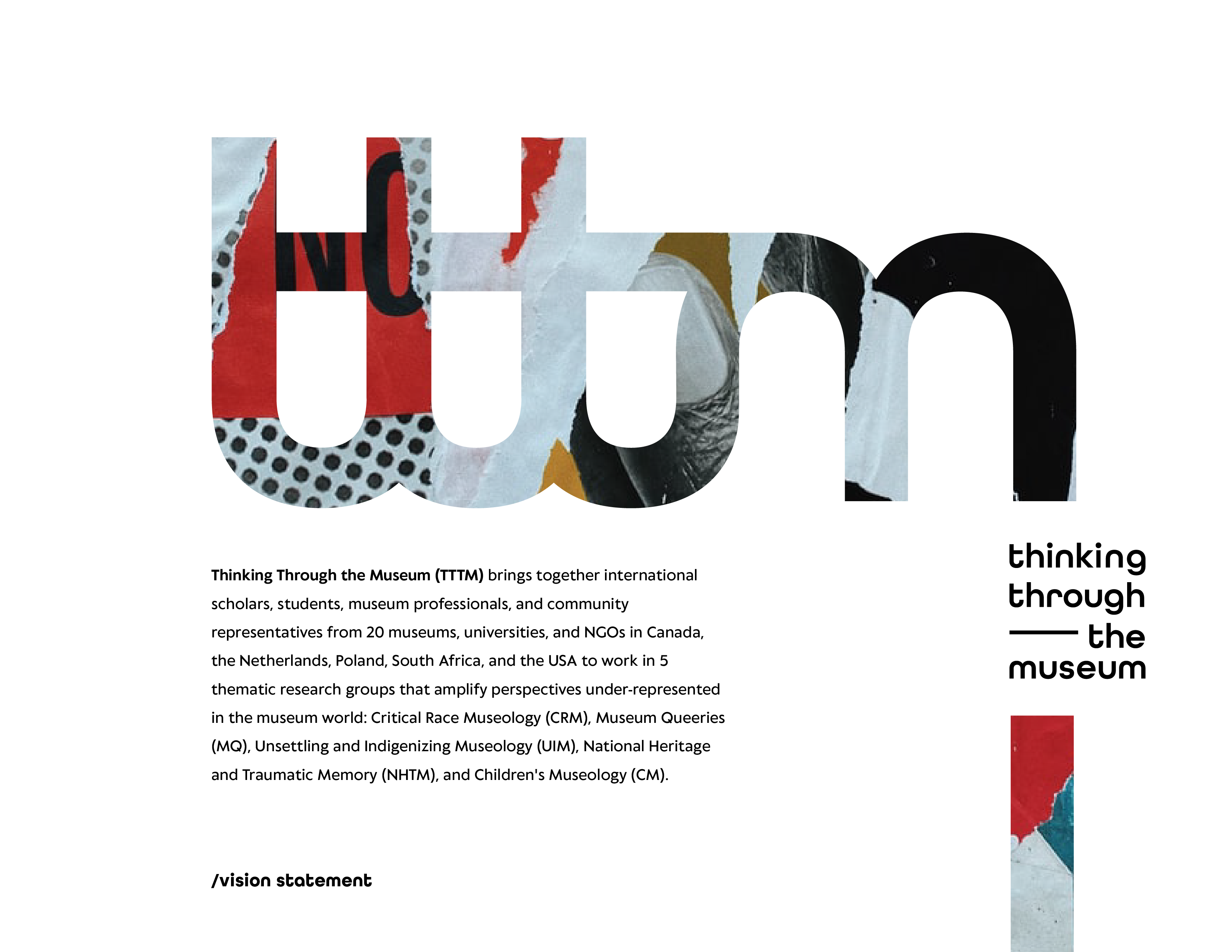
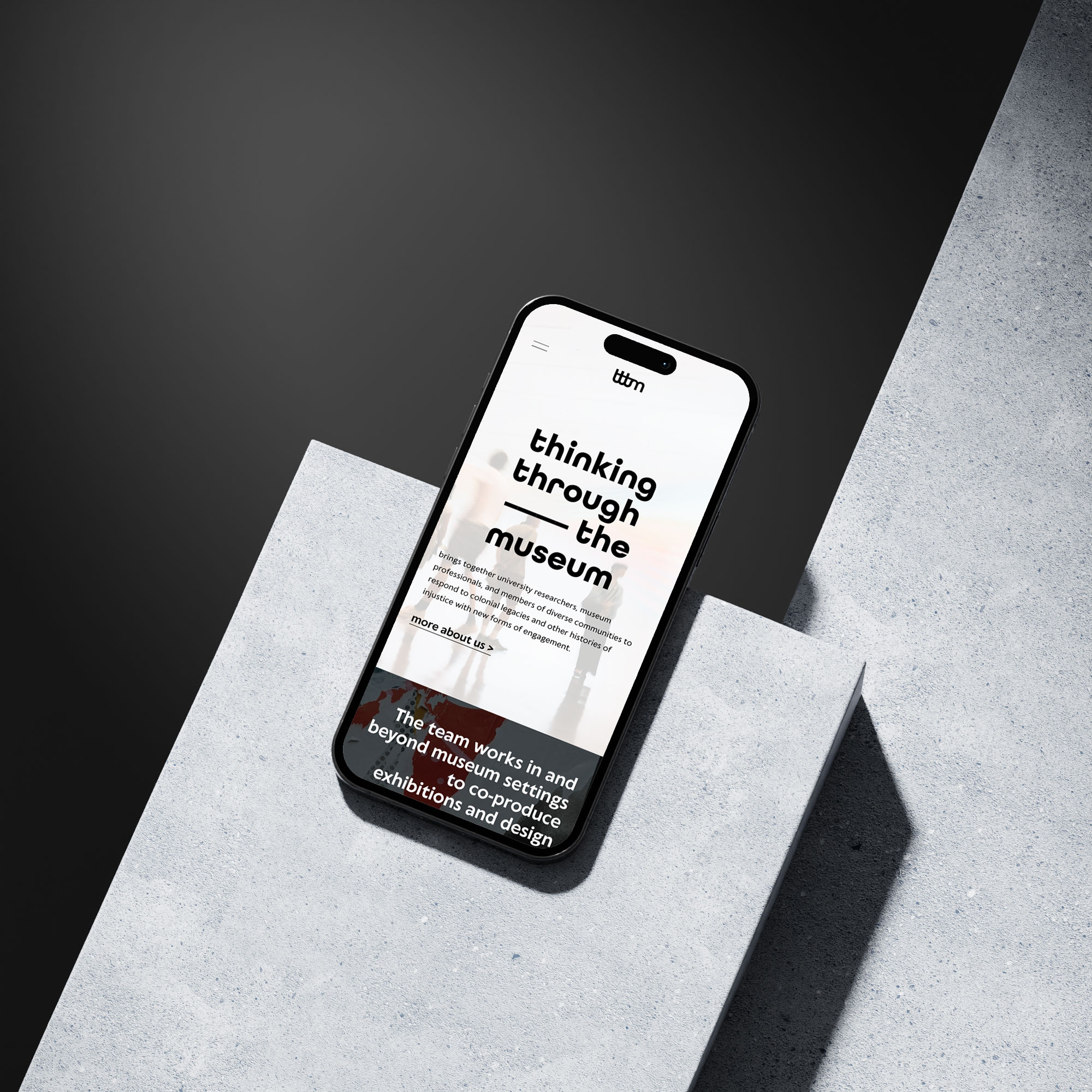
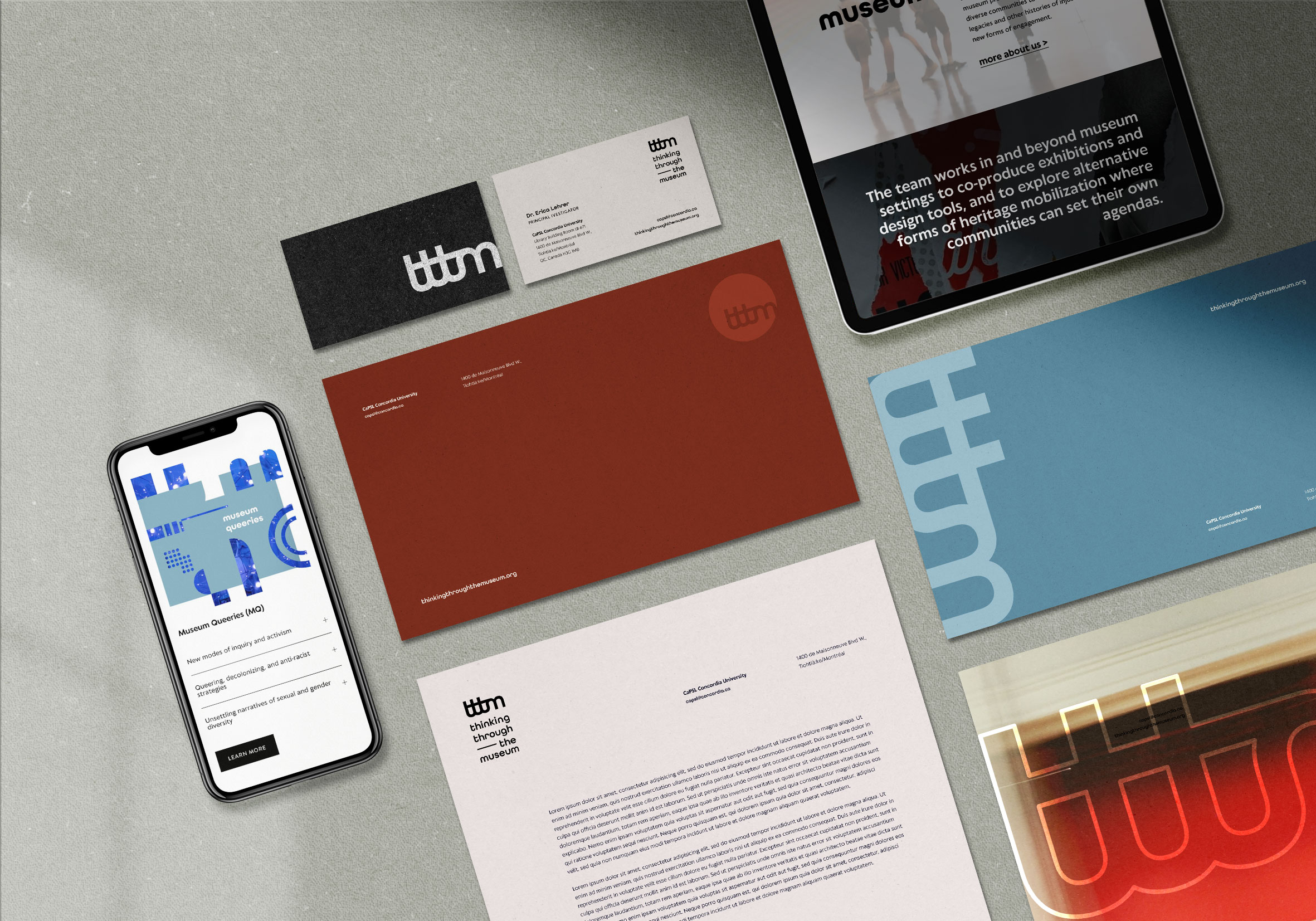
Given the partnership's values and mission, the first challenge faced was designing a logo that would transmit its friendly, intersectional, accessible, and intercultural dialogic essence.
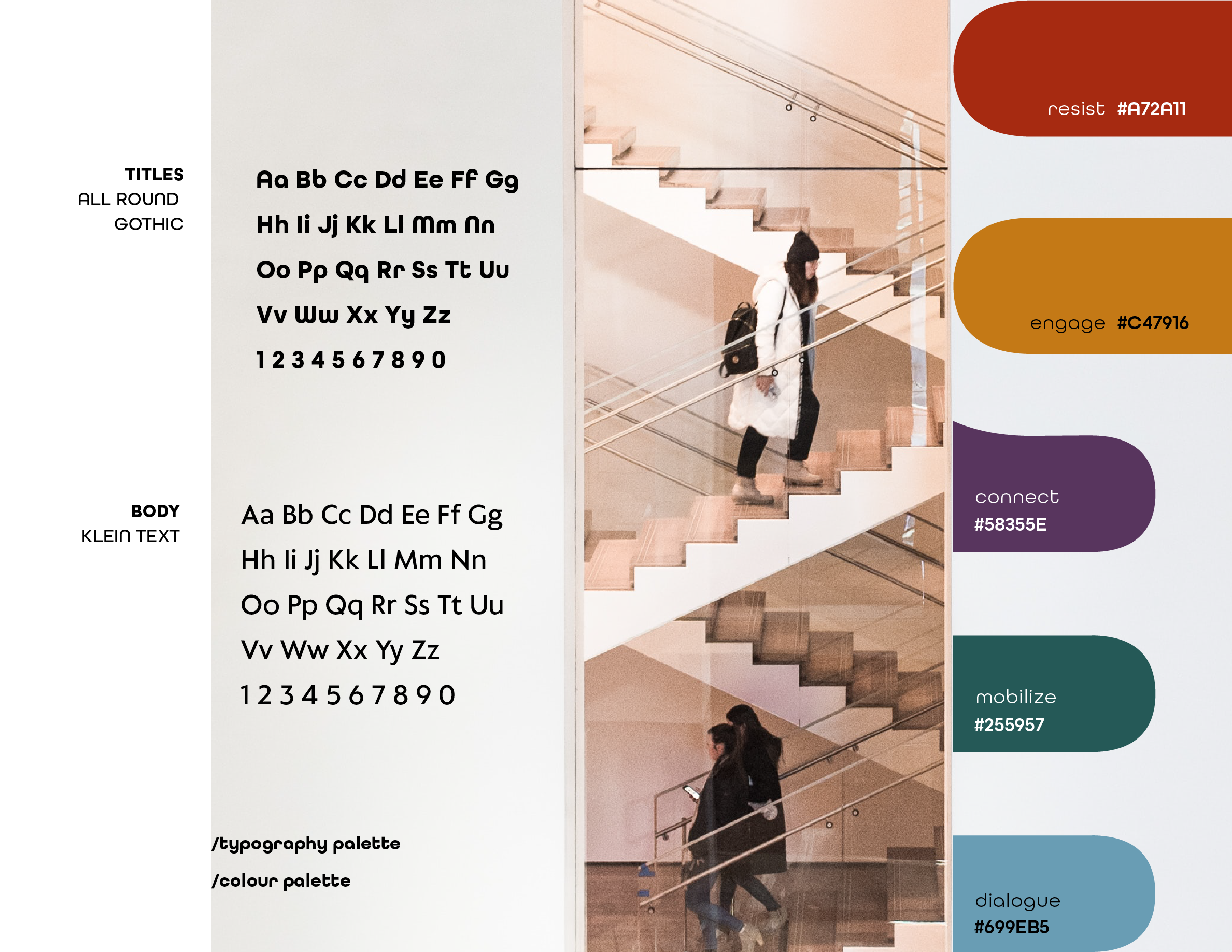
Starting with friendliness, the logo was designed using a rounded sans-serif (All Round Gothic) font and curved shapes. The all-lowercase choice represents the intention to disrupt textual hierarchies, aligning with the organization's desire to go beyond the rigidness of museum walls and encourage playfulness.
The concept of interconnectivity is represented by the connected initials, which allow new shapes, spaces, and counter spaces to form, conveying the intertwining nature of the project's themes and its weave of knowledge.
A second challenge was designing a logo that would work both with the partnership's name and its acronym (tttm). The dash comes into place in the long-form logo containing the organization's name as an element that conducts the eye to the break in the textual flow created by the right-side alignment of the word "the" - therefore challenging linear left-right writing directions.
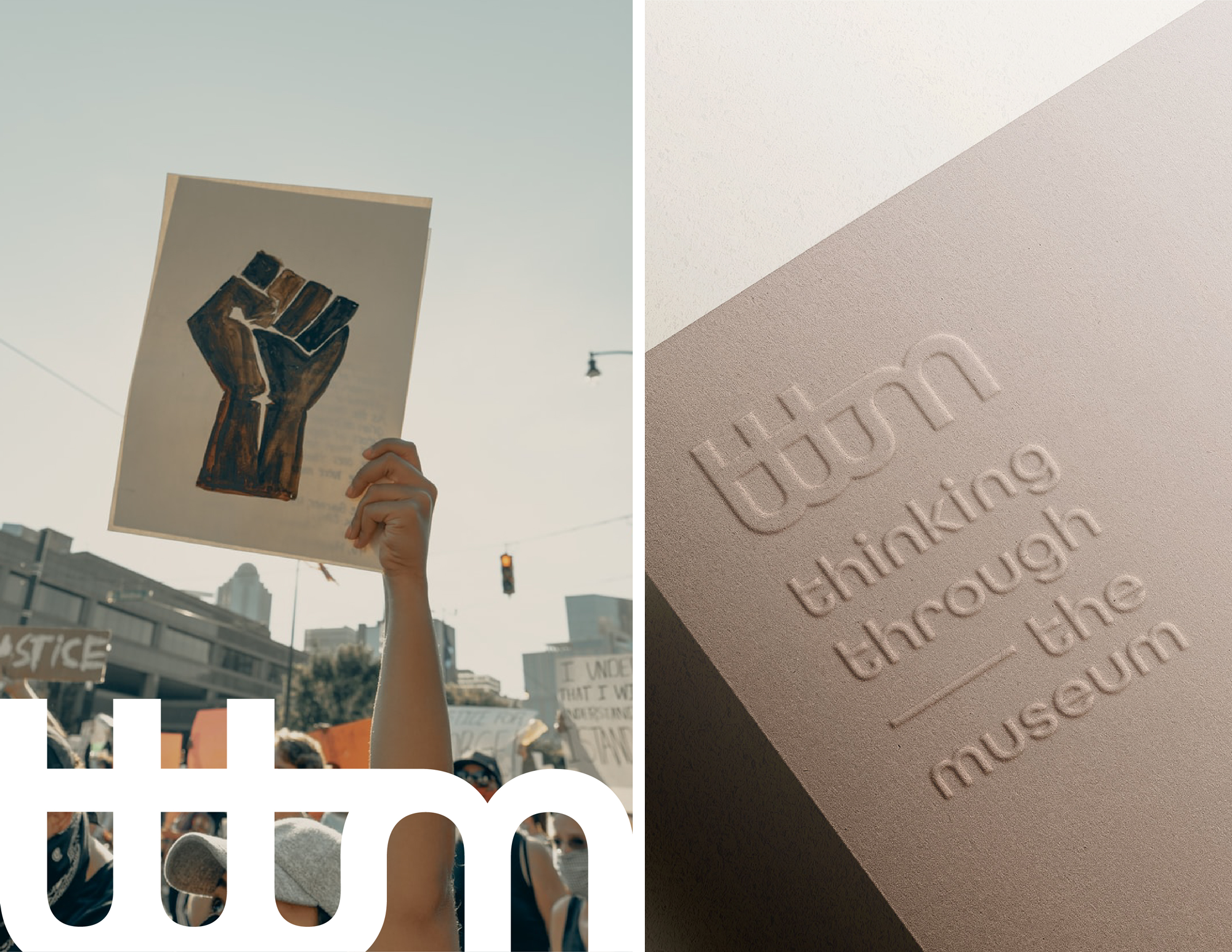
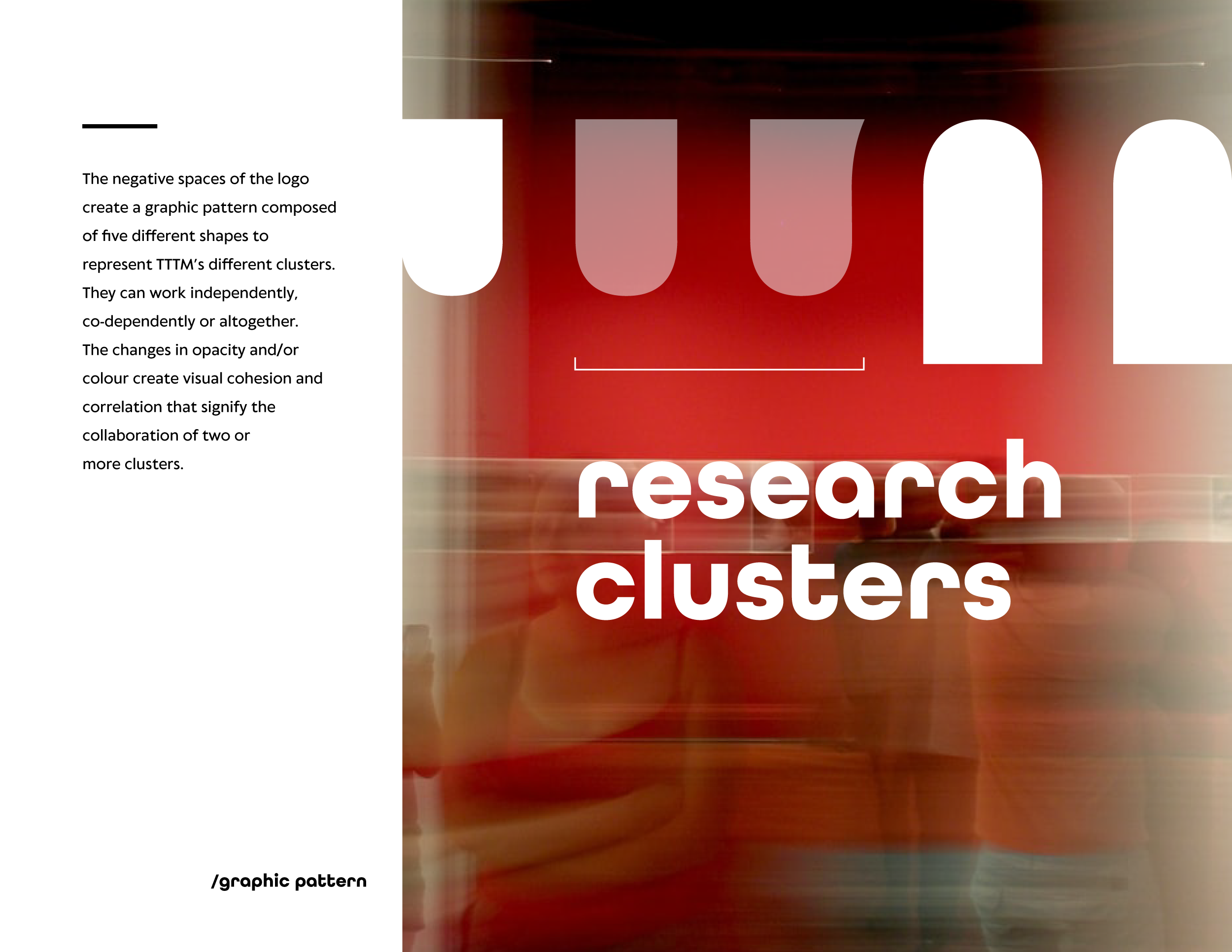
Without leaving aside the importance of readability, the graphic patterns resulting from the negative space between the letters symbolize the five research clusters. These versatile patterns can work independently, co-dependently or altogether.
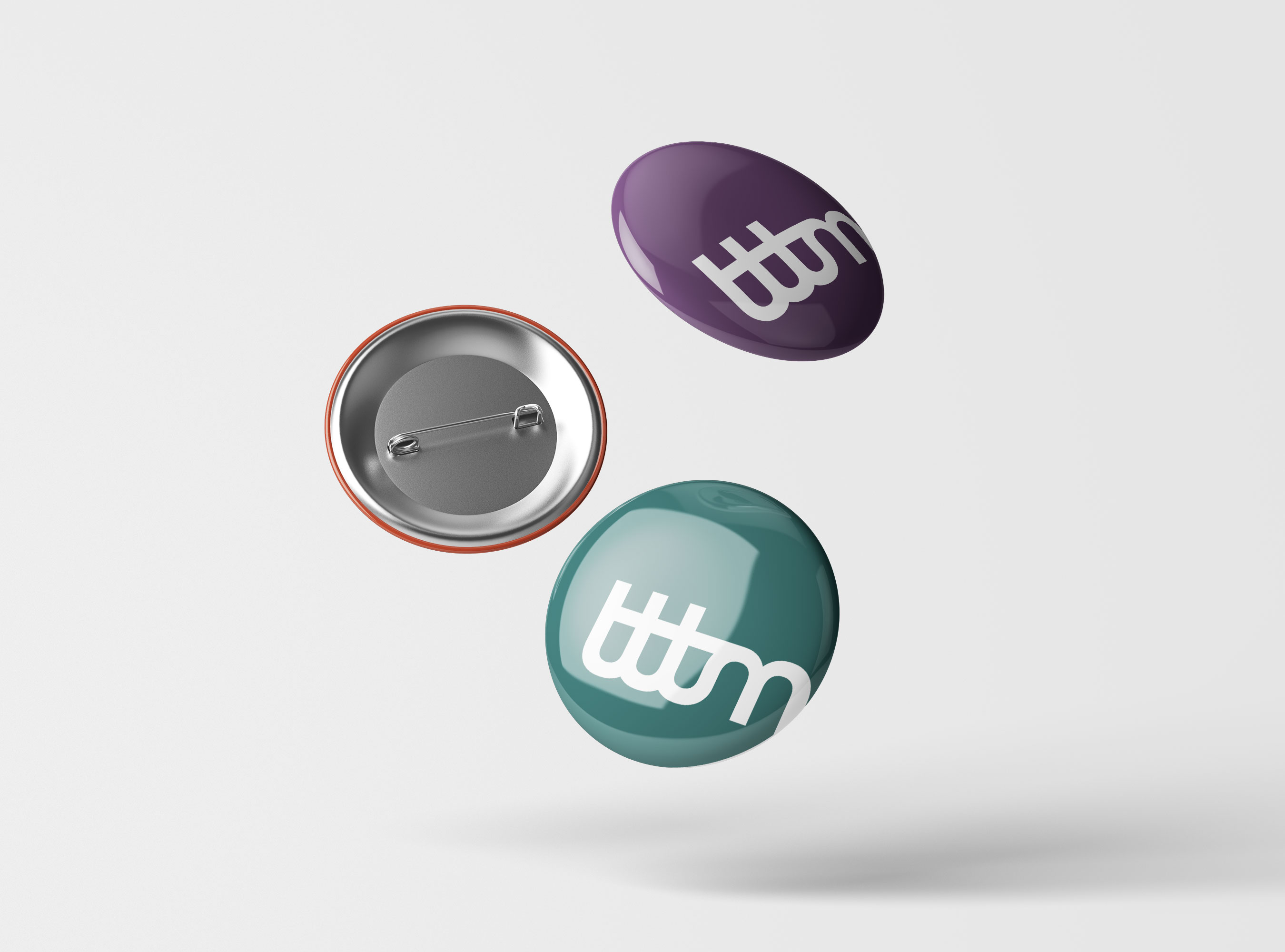
The design allows the logo to be used in diverse ways, such as a standalone symbol in different colors, as an outline, off-centre within a circle, containing or overlapping images.
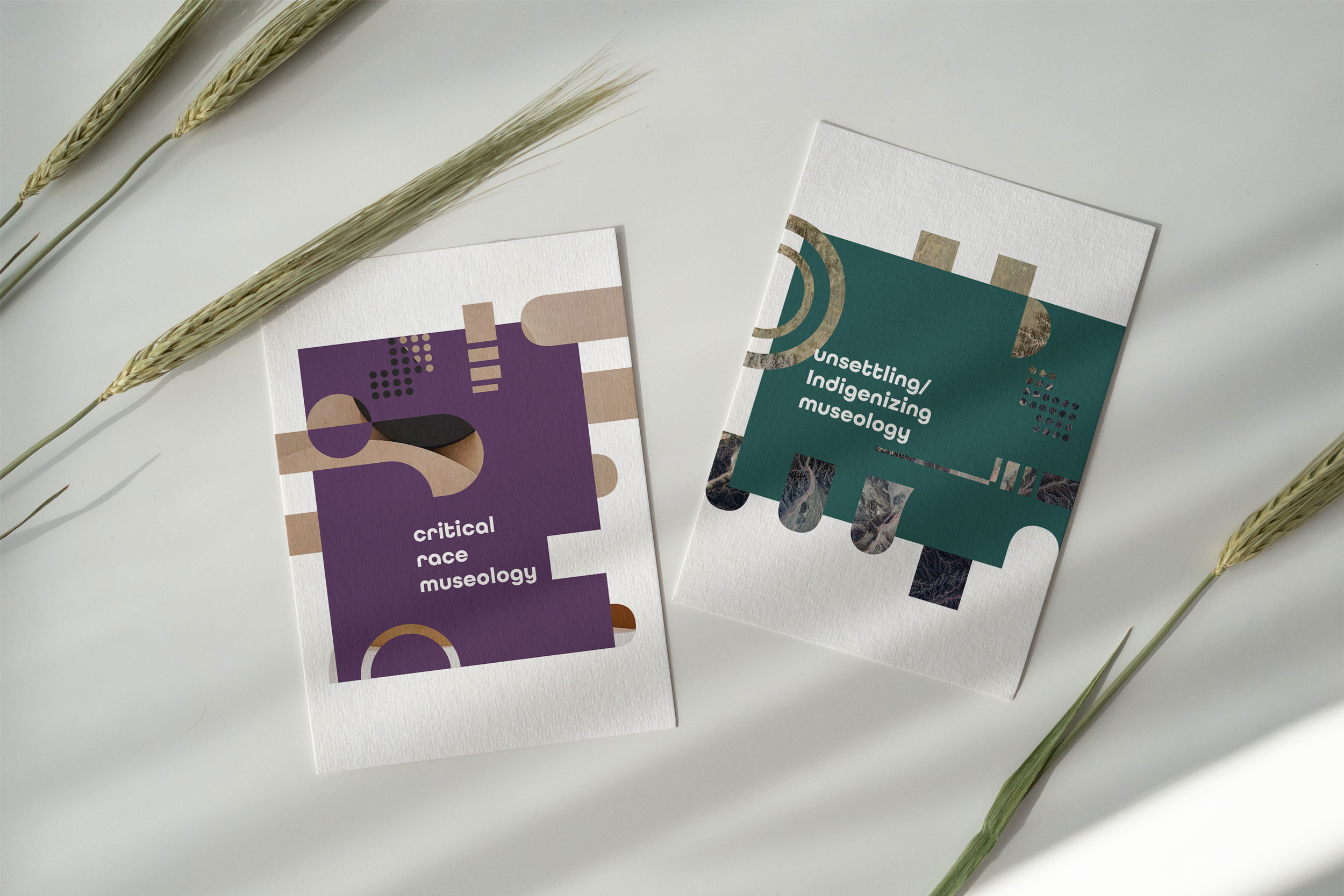
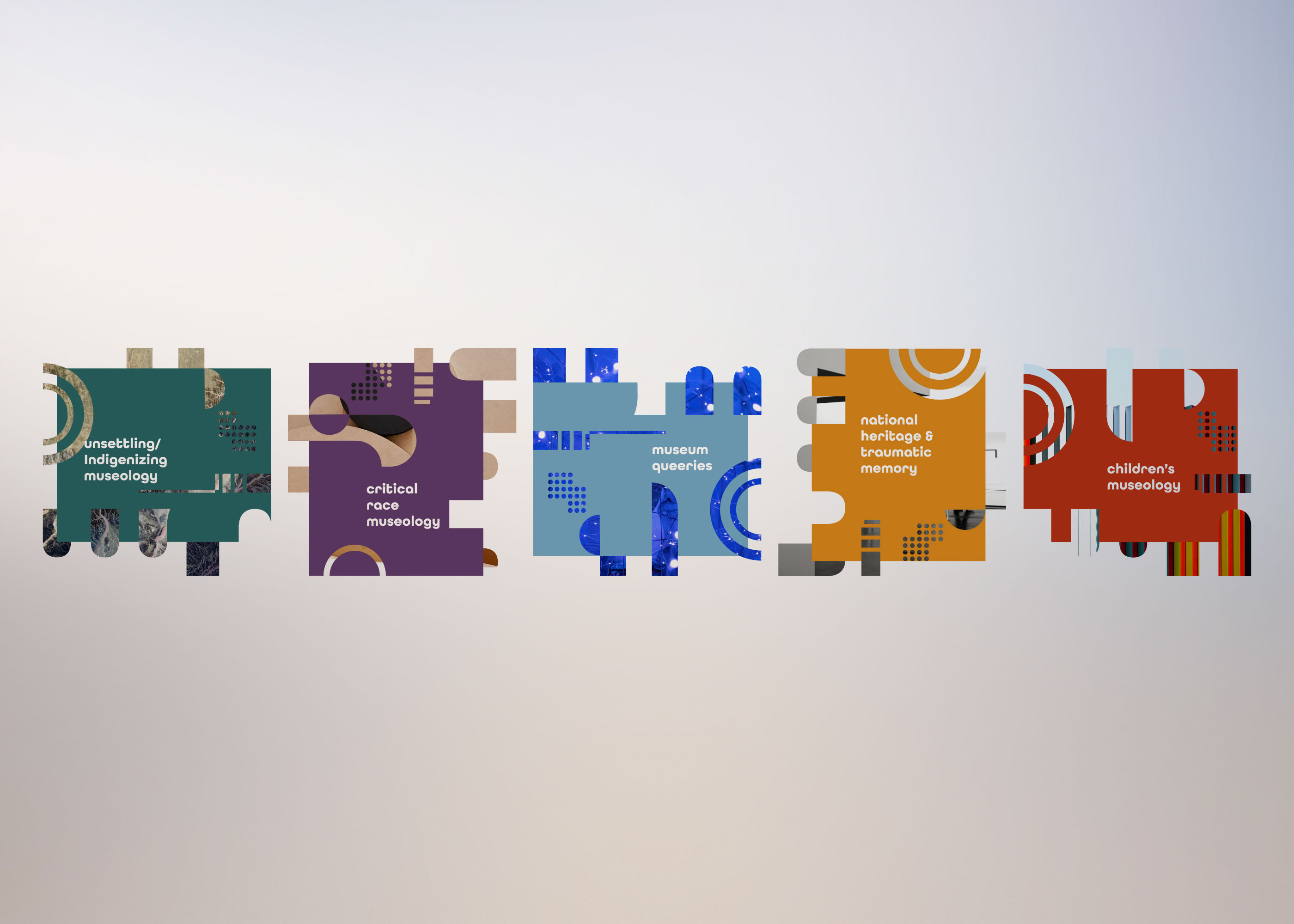
Conveying the partnership's mission through the color palette was crucial. Therefore, the choice of color stems from the intention to use tones that are WCAG accessible and complementary and are aligned with the initiative’s concrete actions: to resist, engage, connect, mobilize, and dialogue.
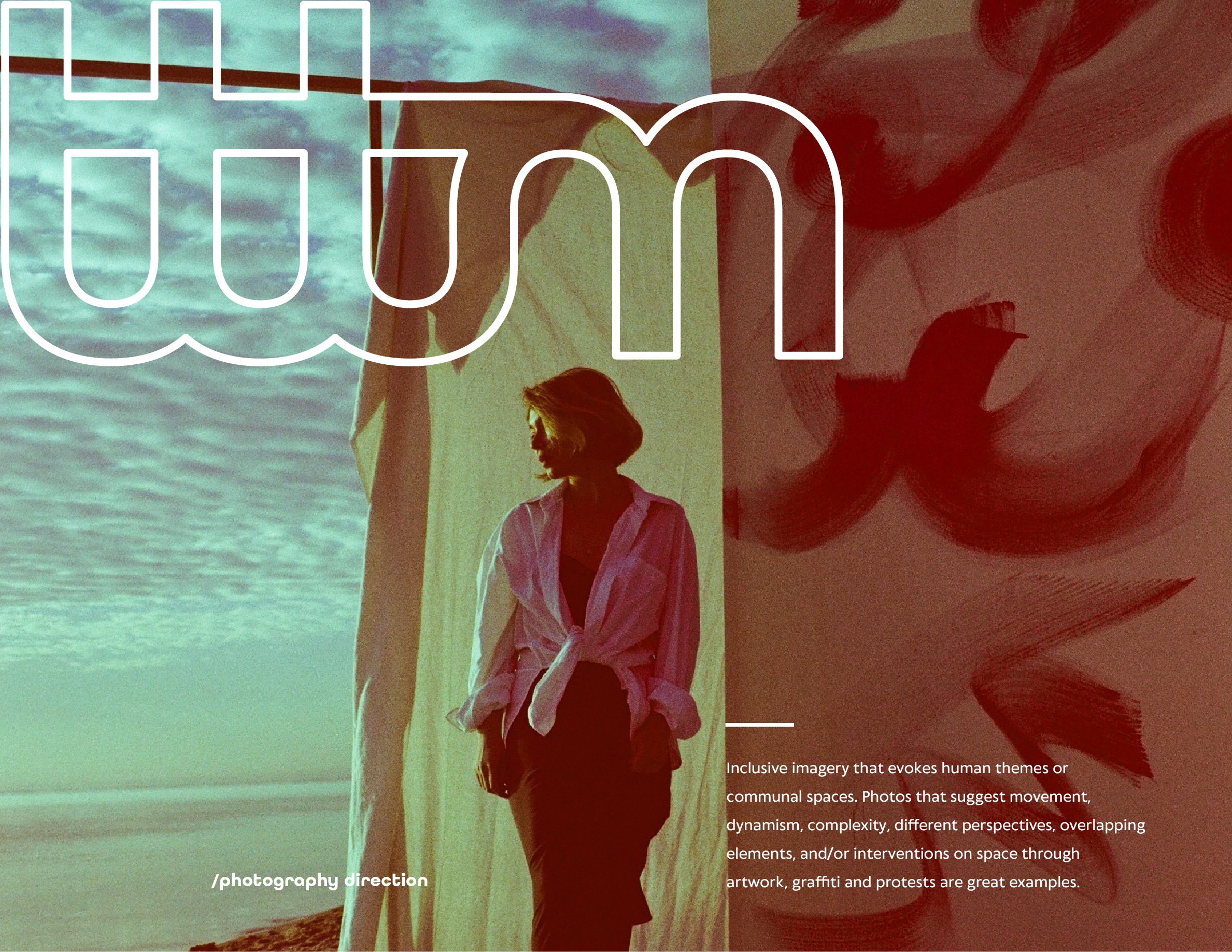
Lastly, the logo's design can be integrated into photos (and vice-versa) to create a visual correlation between image and text. This is a visual resource that disrupts the imagery and/or text but also deeply integrates them. The logo also allows the overlap of inclusive imagery, evoking human themes or communal spaces. Photos that suggest movement, dynamism, and complexity match the logo's outline, thus creating intervention and visual correlation between image and text.
This aspect of photo collage combined with the puzzle element used on the website to represent each multi-disciplinary research cluster highlights the partnership’s unique tools, concepts, perspectives, partner organizations, and geographic contexts.
All in all, the creative process' goal was to invite folks to rethink the Eurocentric roots of design and challenge universal ideals of aesthetics while also giving emphasis to tttm’s core values of community, intercultural dialogue, solidarity across differences and the bridging of geographies in museum research.